Wrong-way driving crashes are among the most catastrophic traffic incidents on American roads. They often involve high speeds, head-on collisions, and a heightened risk of fatalities. While many people associate these crashes with busy urban interstates or confusing downtown interchanges, recent data suggests a different and more troubling reality: wrong-way crashes are disproportionately occurring in suburban, semi-rural, and rural areas rather than in the nation’s largest cities.
A recent state-by-state and county-level analysis of fatal wrong-way driving crashes highlights where these incidents happen most often and why certain regions face elevated risks. The findings challenge common assumptions and reveal patterns that transportation officials and drivers alike should pay close attention to.
Looking Beyond Big Cities
At first glance, it may seem logical that large metropolitan areas would experience the highest number of wrong-way crashes simply due to traffic volume. In raw numbers, populous states do tend to report more total incidents. However, when researchers examine wrong-way crashes as a share of all fatal crashes, a different picture emerges.
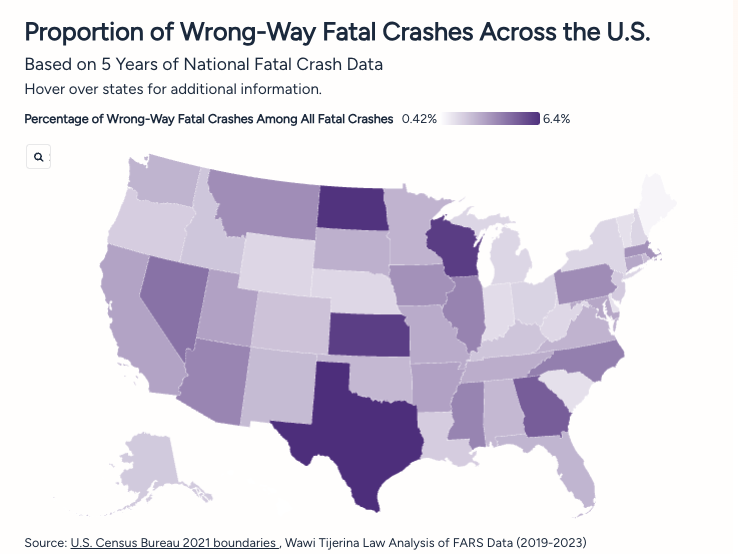
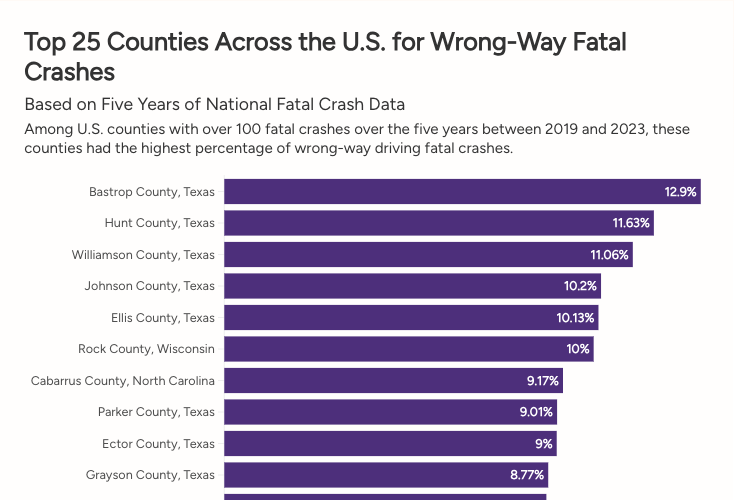
Nationally, just over 3% of fatal crashes involve a wrong-way driver. But in several states and counties—many of them less densely populated—this share rises dramatically. Texas, for example, accounts for the highest proportion of fatal wrong-way crashes in the country, at more than double the national average. Several rural and semi-rural counties within the state report rates that far exceed those seen in major metropolitan centers.
This pattern shows that traffic density alone does not explain wrong-way crash risk. Instead, road design, enforcement, and driving conditions play a far greater role.
The Role of Road Design and Speed
One of the most significant factors contributing to wrong-way crashes outside major cities is road design. Rural highways, state roads, and farm-to-market routes often feature:
- Higher speed limits
- Fewer physical barriers or median dividers
- Limited lighting at night
- Sparse signage at ramps and intersections
In these environments, a single wrong turn, especially at an unlit interchange, can immediately place a driver into oncoming traffic with little opportunity to correct the mistake. At highway speeds, the margin for error is slim, and collisions are far more likely to be fatal.
Urban areas, by contrast, increasingly rely on engineered safety measures such as better ramp signage, one-way street markings, protected medians, and traffic-calming infrastructure. These features reduce both the likelihood and severity of wrong-way incidents.
Alcohol Impairment Amplifies the Risk
Another critical factor is alcohol involvement. Data shows that nearly one-third of fatal wrong-way crashes involve legally intoxicated drivers, with some states reporting intoxication rates well above 50%.
Rural and suburban areas may be particularly vulnerable to this issue. Longer distances between destinations, limited rideshare availability, and fewer late-night transportation alternatives can lead impaired drivers to rely on personal vehicles. High-speed roads connecting communities to entertainment districts further increase the danger.
Once an impaired driver enters a divided highway or state road in the wrong direction, slower reaction times and reduced situational awareness significantly increase the likelihood of a deadly head-on collision.
Enforcement and Resource Gaps
Large metropolitan areas often benefit from greater access to traffic enforcement resources and safety technology. Speed cameras, ramp monitoring systems, and dedicated traffic units are more common in major cities than in smaller jurisdictions.
In contrast, rural and semi-rural counties may face staffing shortages and budget constraints that limit proactive enforcement. Wrong-way detection systems—such as thermal cameras and automated alerts—are expensive to install and maintain, making widespread deployment difficult outside urban centers.
Without consistent enforcement or early detection, wrong-way drivers may travel farther before being stopped or alerted, increasing the risk of fatal outcomes.
Why Texas Stands Out
Texas exemplifies how these factors intersect. The state leads the nation not only in total fatal wrong-way crashes but also in the proportion of such crashes relative to all fatal collisions. A significant number of high-risk counties are located outside major metro cores, often along high-speed state highways and rural connectors.
In these areas, wrong-way crashes frequently occur on roads designed for speed rather than error correction. When combined with alcohol impairment and limited lighting, the result is a disproportionate number of fatal incidents compared to more densely populated regions.
What Can Be Done
Reducing wrong-way crashes outside major metros requires targeted solutions rather than one-size-fits-all policies. Effective strategies include:
- Improved signage and pavement markings at highway ramps
- LED-illuminated wrong-way warning signs
- Detection and alert systems that notify drivers and dispatch law enforcement
- Increased public education on impaired driving risks
- Data-driven identification of wrong-way crash hot spots
Several states have already begun implementing these measures with promising results, demonstrating that targeted interventions can save lives.
A Data-Driven Wake-Up Call
Wrong-way crashes are not just a big-city problem. In many cases, the most dangerous environments are found beyond urban cores, where high speeds, limited infrastructure, and impaired driving converge. Understanding where and why these crashes happen is essential to preventing future tragedies.
As detailed in a recent multi-year analysis of fatal wrong-way driving crashes across the U.S., recognizing these patterns can help policymakers, transportation agencies, and communities focus resources where they are needed most—and ultimately make America’s roads safer for everyone.